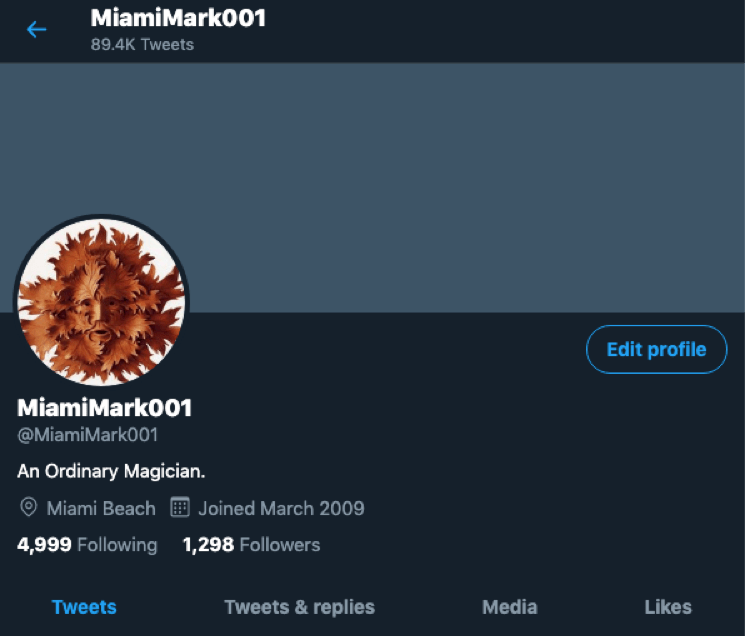
Figure 1: Screen shot of my Twitter profile page taken Monday, June 8, 2020.
- Defining the problem, and how data analytics might constitution a beneficial intervention
This report considers data showing my Twitter usage during a specific two-month period, which (without any evidence to the contrary) might be extrapolated to represent normal Twitter usage over a one-year period. Twitter is a social media platform that I use on a daily basis. Whether frequent daily usage of Twitter is beneficial or detrimental is not necessarily determined by this report, and the analysis and discussion are meant to be reflective, at this time. The reflection is meant to quickly assess the time and energy consumed using Twitter, the personal and professional benefits, considered against the potential risks of wasted time, lost productivity and other possibly negative effects, i.e., eye fatigue due to excess reading, dilution of mental focus and concentration, chronic distraction from other priorities, mechanized enablement of self-sabotaging procrastination, etc.
I teach undergrad Liberal Arts & Humanities college courses that span Critical Thinking, Speech & Debate, Emerging Media, Mass Media and Sociology. I engage with my students on social media and require them to bring current event articles and trending topics to class for group discussion, each week. Herein in my primary motivation to use Twitter. Figures 2 and 3 illustrate the Tweet Cloud / Hash-Tag spectrum of topics and influencers, with whom I regularly engage on Twitter.
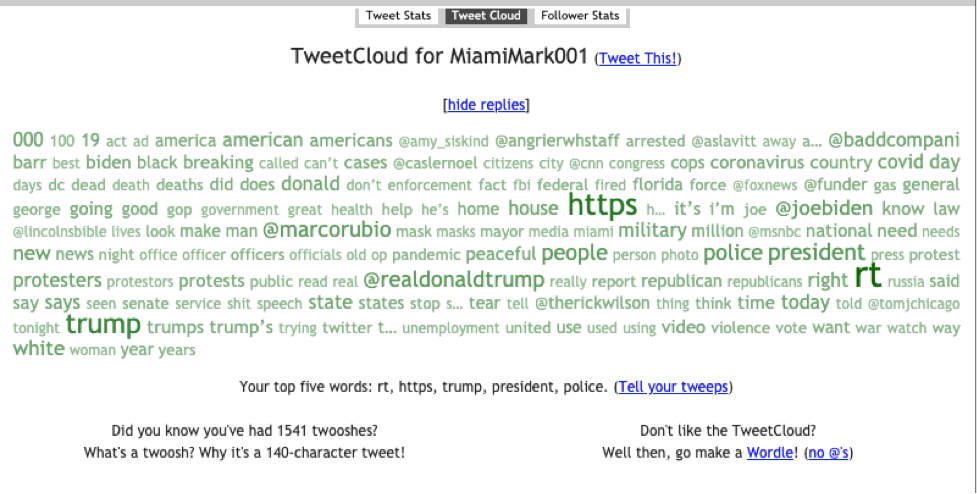
Figure 2: Screen shot of my TweetCloud taken June 7, 2020.
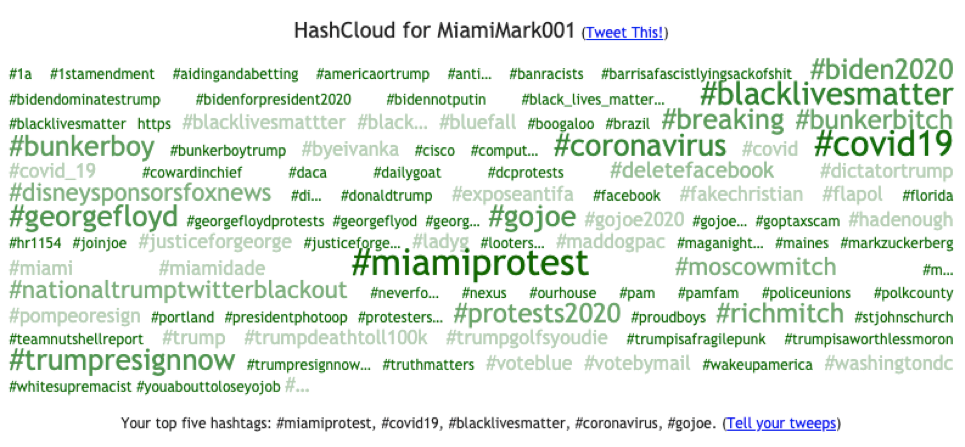
Figure 3: Screen shot of Hash Cloud taken June 7, 2020.
I am also a consultant, and some of my clients are political candidates, Nonprofit NGO’s and other politically engaged groups within local, state and national sectors of civil society. Herein lies my 2nd motivation. Additionally, I pride myself on my political and social activism and community leadership and volunteerism across a variety of social groups, which further motivates me to utilize Twitter as a platform for my own online political activism. The effectiveness of grassroots activism on Twitter has been documented in many countries, including China, Egypt, Italy, Libya, Spain, The U.K. and the USA (Benney, 2011; El-Nawawy, M., Khamis, S., & Khamis, C. S., 2012; Lindgren, S., 2013; Micó, J. L., & Casero-Ripollés, A., 2014; Potts, A., Simm, W., Whittle, J., & Unger, J. W., 2014; Vicari, S., 2013; Xu, W. W., Sang, Y., Blasiola, S., & Park, H. W., 2014).
I also consider Twitter a good source for news and useful information. Finally, I find it entertaining, and I also have expanded my professional and personal network of friends through contacts made on Twitter. The effects of Twitter, the function and benefits / detriments have been researched and situated within established and new theoretical frameworks (Aladwani, A. M. (2015). Debates and discourses about the spectrum of known benefits versus known detriments straddle interdisciplinary analysis, including sociological, psychological, anthropological, medical and biological, etc., (Doğan, U., 2016; Hawn, C., 2009). More specific studies have considered social, mental, emotional and physical effects of Twitter usage by students and academics, which are more germane to my personal reflections (Junco, R., Heiberger, G., & Loken, E., 2011).
- Brief Description of the Data Collection and Analysis Processes
My data collection, analysis and conversion to graphs was executed by Damon Cortesi’s TweetStats site located at http://www.tweetstats.com/ TweetStats was recommended by the course instructor, who is a considered reliable source for such referrals. The process took a few minutes, and has some reports that are updated daily. Please see Figure 4 for a graph showing usage for two months.
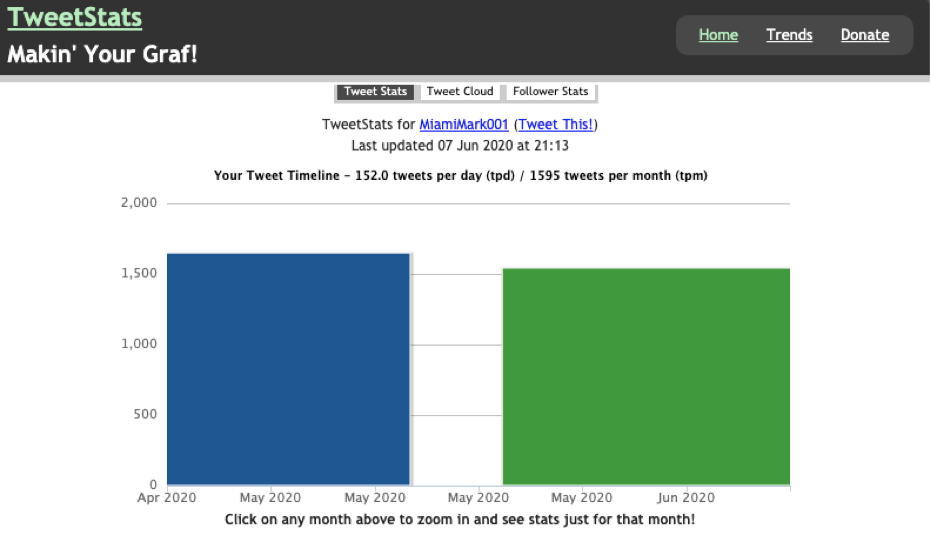
Figure 4: Screen of my Twitter usage over two months, as reported by TweetStats on June 7, 2020.
- Key Observations
These graphed reports show my Twitter usage to be 152.0 Tweets per day (tpd) and 1,595 Tweets per month (tpm). I have clocked 89.4k Tweets since I joined with this handle in 2009. There is a broader context, since I also have comparable usage data on blogs, Facebook, Reddit and other online sites. Therefore, my reflection as to whether my Twitter usage is beneficial or detrimental must be open-minded to every possibility and implication, as well as detached and nonjudgmental, since the data is showing trends and patterns, and not necessarily demonstrated causal relationships between social media usage and productivity, etc.
Is this excessive? I would like to think not. But I am mature and circumspect enough to realize that a single Tweet that I send out (in a minute or two) might seem benign in and of itself, but the accumulated effects of daily and monthly usage are what I would like to reflect upon in my report. I note that it is my usual routine to complete work related tasks on my MacBook Air and MacBook Pro laptops, which are on my desktop. Most of my Tweets are sent from my iPad, which I usually use while in bed, as noted in Figure 5.
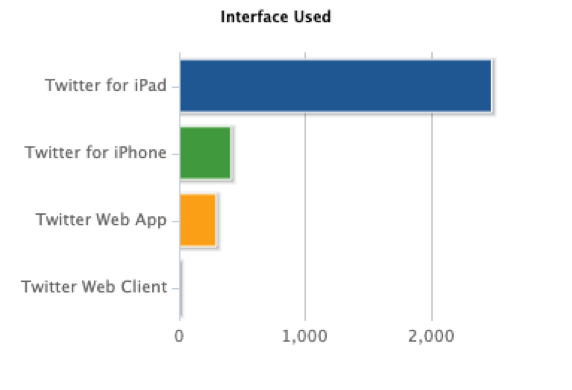
Figure 5: Screen shot of devices used for Tweets, taken June 7, 2020.
Another observation is that my Tweets sent from my Ipad while in bed are mostly political in nature, and limited to those candidates / causes I support and those that I reject, as seen in Figure 6.
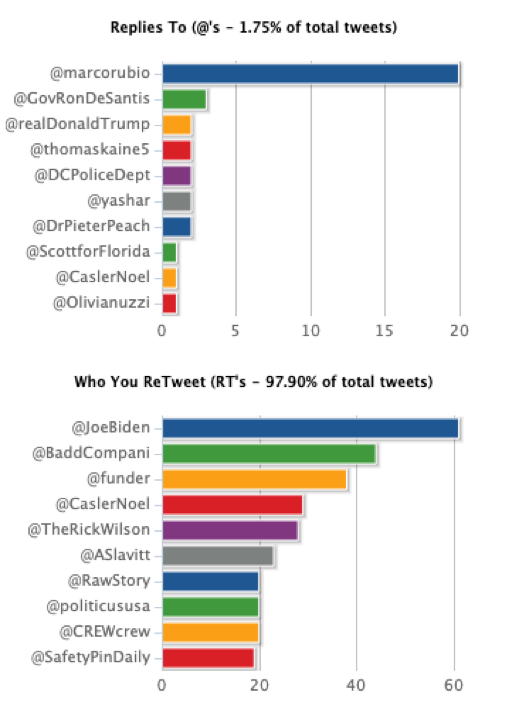
Figure 6: Screen shot of most frequent targets of Tweets, taken June 7, 2020.
- Scope, Significance, Integration of relevant findings
The scope of this the data sample and its relevance is limited to a two-month sample, reported yesterday. We are at the beginning of a new summer semester, a term in which my load of theory / history / current events based modules was skewed to support the needs of online learning within my college. We are 150 days or so before the next Presidential Election, and to say that many folks are engaged beyond their usual involvement in events and politics would be an understatement, given the usual coincidence of media blasting events occurring in the last 6 months. Could this skew the sample to show a bias and usage level that is abnormal, due to recent events, etc.? A closer look at the Tweet density seems to indicate that I use Twitter at 8 am and at 8 pm, on my iPad while in bed, to engage mostly in political conversations, as seen in Figure 7.
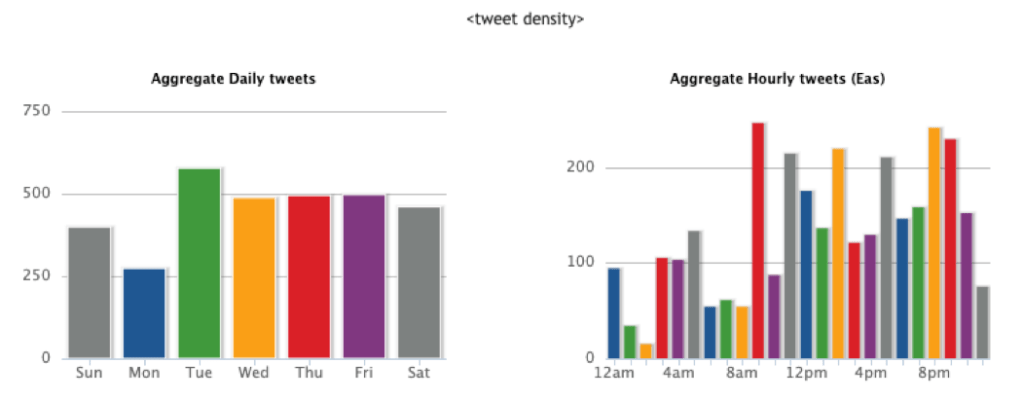
Figure 7: Screen shot of Tweet Density, taken June 7, 2020.
As to the significance and meaningfulness of this data analysis, the sample might be skewed and it might be too small to merit large dependence upon things that might be inferred. It is likely that a larger sample that spreads out beyond the political season would net a more reliable set of graphs, (e.g., beyond the next Inauguration Day, Jan. 21, 2021, when presumably my engagement would increase or decrease, depending upon who is elected). This would be a future consideration.
What can be known today is evident: I Tweet from bed on my IPad about politics. Whether I want to monitor this or limit this usage is not clear to me. I can see how 152 Tweets per day is time-consuming, and I must consider whether the personal and professional benefits offset the time demands. Also, I might decide to limit my usage, not because I concluded it is detrimental, but because I have other priorities. In this case, it seems like a plausible and feasible strategy might be to not bring my IPad or any device to bed (maybe invest in some old fashioned books to read and a bedside reading lamp, etc.). I could also self-regulate by setting for myself a moratorium on (reading or sending) any political Tweets for the next 60 days, to experiment and see whether indicators of productivity improve, etc. These are worthy items to reflect upon, and in conclusion, I have found this exercise to be informative, fun and useful – I never attempted to chart my own data before, and this was a pleasant learning experience, on several levels.
Bibliography
Aladwani, A. M. (2015). Facilitators, characteristics, and impacts of Twitter use: Theoretical analysis and empirical illustration. International Journal of Information Management, 35(1), 15-25.
Benney, J. (2011). Twitter and legal activism in China. Communication, Politics & Culture, 44(1), 5.
Doğan, U. (2016). Effects of social network use on happiness, psychological well-being, and life satisfaction of high school students: Case of facebook and twitter. Egitim ve Bilim, 41(183).
El-Nawawy, M., Khamis, S., & Khamis, C. S. (2012). Political activism 2.0: Comparing the role of social media in Egypt’s “Facebook revolution” and Iran’s “Twitter uprising”. C yber O rient, 6(1), 8.
Hawn, C. (2009). Take two aspirin and tweet me in the morning: how Twitter, Facebook, and other social media are reshaping health care. Health affairs, 28(2), 361-368.
Junco, R., Heiberger, G., & Loken, E. (2011). The effect of Twitter on college student engagement and grades. Journal of computer assisted learning, 27(2), 119-132.
Konnelly, A. (2015). # Activism: Identity, Affiliation, and Political Discourse-Making on Twitter. The Arbutus Review, 6(1), 1-16.
Lindgren, S. (2013). The potential and limitations of Twitter activism: Mapping the 2011 Libyan Uprising. tripleC: Communication, Capitalism & Critique. Open Access Journal for a Global Sustainable Information Society, 11(1), 207-220.
Micó, J. L., & Casero-Ripollés, A. (2014). Political activism online: organization and media relations in the case of 15M in Spain. Information, communication & society, 17(7), 858-871.
Potts, A., Simm, W., Whittle, J., & Unger, J. W. (2014). Exploring ‘success’ in digitally augmented activism: A triangulated approach to analyzing UK activist twitter use. Discourse, context & media, 6, 65-76.
Vicari, S. (2013). Public reasoning around social contention: A case study of Twitter use in the Italian mobilization for global change. Current Sociology, 61(4), 474-490.
Xu, W. W., Sang, Y., Blasiola, S., & Park, H. W. (2014). Predicting opinion leaders in Twitter activism networks: The case of the Wisconsin recall election. American Behavioral Scientist, 58(10), 1278-1293.
 Dottore Mark